
Kaltwasserpumpe und Filter: Sollten Sie sie kombinieren oder getrennt verwenden?
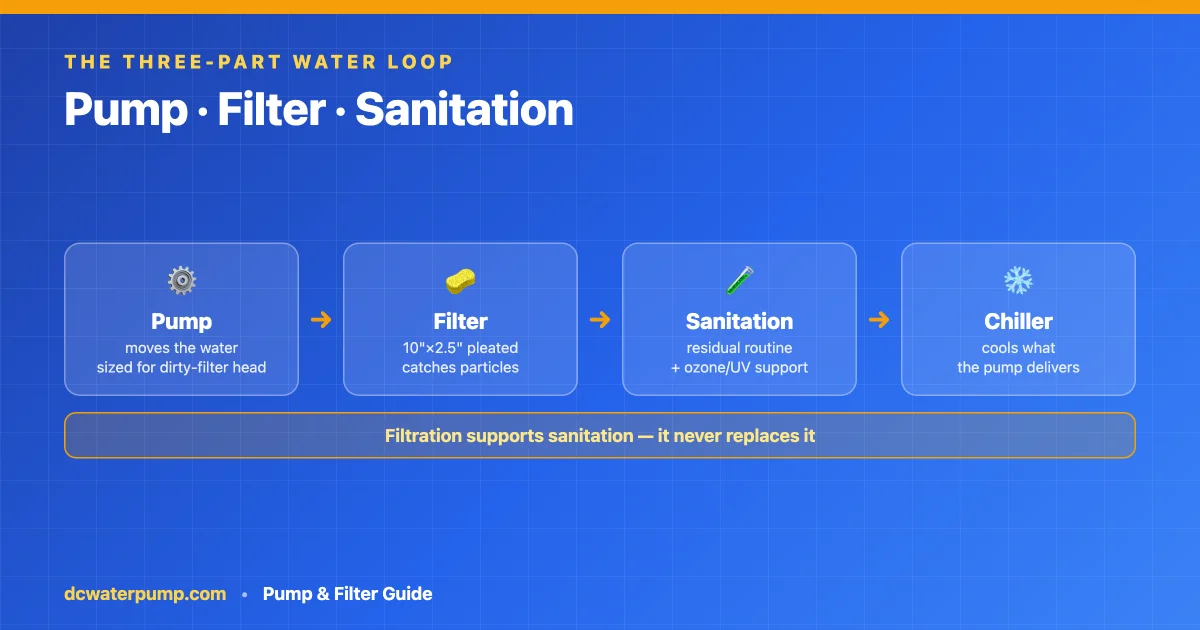
TL;DR: Jedes Kaltwasserbecken, das noch funktionstüchtig ist, durchläuft denselben dreiteiligen Wasserkreislauf: a Pumpe Wasser bewegen, ein Filter um Partikel aufzufangen, und ein Sanitärprogramm – eine Restwasseraufbereitungsmethode, üblicherweise ergänzt durch Ozon oder UV-Licht – um das zu behandeln, was Filter nicht bewältigen können. Ihre eigentliche Entscheidung ist architektonischer Natur: ein integriertes System (eine versiegelte Einheit, minimale Auswahl, Premiumpreis) oder eine separate Schleife (Standardteile, volle Kontrolle, Ihre Arbeitsleistung). Dieser Leitfaden vergleicht die beiden Systeme ehrlich und behandelt anschließend den Filterpatronenstandard, den Kompromiss zwischen Mikrongröße und das Detail der Pumpenanpassung, das bei den meisten Selbstbauprojekten übersehen wird – den Druckverlust des Filters.
Benötige ich eine Pumpe und einen Filter für ein Kaltwasserbecken?
Ja – eine Umwälzpumpe befördert das Wasser durch einen Kartuschenfilter, um Hautfett, Haare und Schmutz zu entfernen. Ohne Filter sammelt sich alles, was Sie in die Wanne geben. Die Filtration entfernt jedoch nur Partikel: Sie unterstützt Ihre Reinigungsmaßnahmen (Ozon-, UV- oder Wasseraufbereitung) und ersetzt diese nicht.
Die Frage, die die Suchergebnisse nicht beantworten werden
Wenn Sie zu diesem Thema recherchieren, finden Sie Produktseiten zu Filterpatronen, Anleitungen nur für Filter und DIY-Anleitungen auf YouTube – jede behandelt nur eine Komponente. Was aber nirgends gegenübergestellt wird, ist die eigentliche Kaufentscheidung: Soll man ein integriertes Tauchgerät kaufen, bei dem alles innen abgedichtet ist, oder einen separaten Pumpen- und Filterkreislauf aus Standardteilen bauen? Viele kaufen ein $60-Filtergehäuse, bevor sie sich für die zugehörige Architektur entschieden haben – das ist der falsche Ansatz. Die Architektur bestimmt die benötigten Bauteile.
Es gibt eine zweite Lücke, und zwar eine gesundheitsrelevante: Vieles, was geschrieben steht, verwischt die Grenze zwischen Filterung Und Desinfektion. Es handelt sich um unterschiedliche Aufgaben. Eine Filterpatrone fängt Partikel bis zu ihrer Mikron-Nenngröße ab. Bakterien und andere Krankheitserreger werden nicht von einem Partikelfilter entfernt – dafür ist Ihre Wasseraufbereitungsanlage zuständig. Frigepaths Filterleitfaden ist ungewöhnlich direkt. Und eine Ebene tiefer, die es wert ist, präzise formuliert zu werden: Ozon und UV-Strahlung sind ergänzende Behandlungsmethoden und stellen keine vollständige Desinfektion dar. Öffentliche Gesundheitsrichtlinien wie der „Model Aquatic Health Code“ der CDC positionieren Filter als sekundäre Systeme, die neben einem kontinuierlichen Desinfektionsmittelvorrat und regelmäßigen Kontrollen eingesetzt werden, nicht als Ersatz dafür. Eine glasklare Badewanne ist nicht automatisch hygienisch. Filterempfehlungen, die diese Aussagen auslassen, versprechen Klarheit statt Sauberkeit.
Was läuft schief, wenn die Schleife schlecht aufgebaut ist?
Gar keine Filtration. Kaltes Wasser verlangsamt die biologischen Prozesse, stoppt sie aber nicht, und jede Anwendung führt zu einer Ansammlung von Hautschuppen und Hautfetten. Ohne Filterkreislauf besteht die einzige “Wartung” im kompletten Wasserwechsel – was bei einer gekühlten 380-Liter-Wanne bedeutet, dass jedes Mal 380 Liter Wasser erneut gekühlt werden müssen.
Die falsche Patrone. Die ständige Empfehlung der Heimwerker-Community, von DIY-Kaltwasserfilterung – Grundlagen und dies wurde in den Millionen-Aufrufen der YouTube-Videos deutlich. plissiertes Polyester im Standard 10″ × 2,5″ Format: Auswaschbare Falten, vorhersehbarer Durchflusswiderstand, passend für gängige Gehäuse. Erfahrungsgemäß wird jedoch vor billigen, markenlosen Spinnvlies-Filterpatronen (Faserverlust ist die häufigste Beschwerde) und vor Aktivkohleblöcken gewarnt, da diese den Durchfluss in einem Tauchfilter unnötig verlangsamen. Fairerweise muss man sagen, dass namhafte Filterhersteller hochwertige, gewickelte Sedimentfilterpatronen für andere Anwendungen anbieten – hier geht es der Community jedoch vor allem um Waschbarkeit und gleichbleibende Filterleistung. Das Schleife, kein allgemeingültiges Urteil über das Wickeln.
Die Fehlanpassung zwischen Filter und Pumpe. Ein Filter stellt eine Drossel dar, die mit zunehmender Belastung an Kapazität zunimmt. Der dadurch entstehende Förderdruck hängt von der Konstruktion der Filterpatrone, dem Gehäuse und dem Durchfluss ab – der maßgebliche Wert ist der herstellereigene Druckverlust, der mit zunehmender Verschmutzung der Patrone steigt. Wird dieser Faktor ignoriert, bricht der Förderstrom einer leistungsschwachen Pumpe ein – der Kreislauf funktioniert zwar am ersten Tag, aber bereits in der zweiten Woche wird der Kühler nicht mehr ausreichend mit Kältemittel versorgt. Genau diese Dimensionierungsdimension verbindet diesen Artikel mit unserem… Fünfstufiger Leitfaden zur PumpengrößenbestimmungDie Pumpe muss die angestrebte Fördermenge in GPM liefern. am eigentlichen Anfang der Schleife mit einem verschmutzten Filter, Nicht bei Null-Druck mit einem sauberen. Die Physik ist in Maximale Förderhöhe vs. Durchflussrate.
Den Filter als Hygieneplan betrachten. Beim dritten Mal, denn diesmal kommt es darauf an: Partikel werden vom Filter entfernt, Krankheitserreger von der Desinfektion. Planen Sie beides ein.
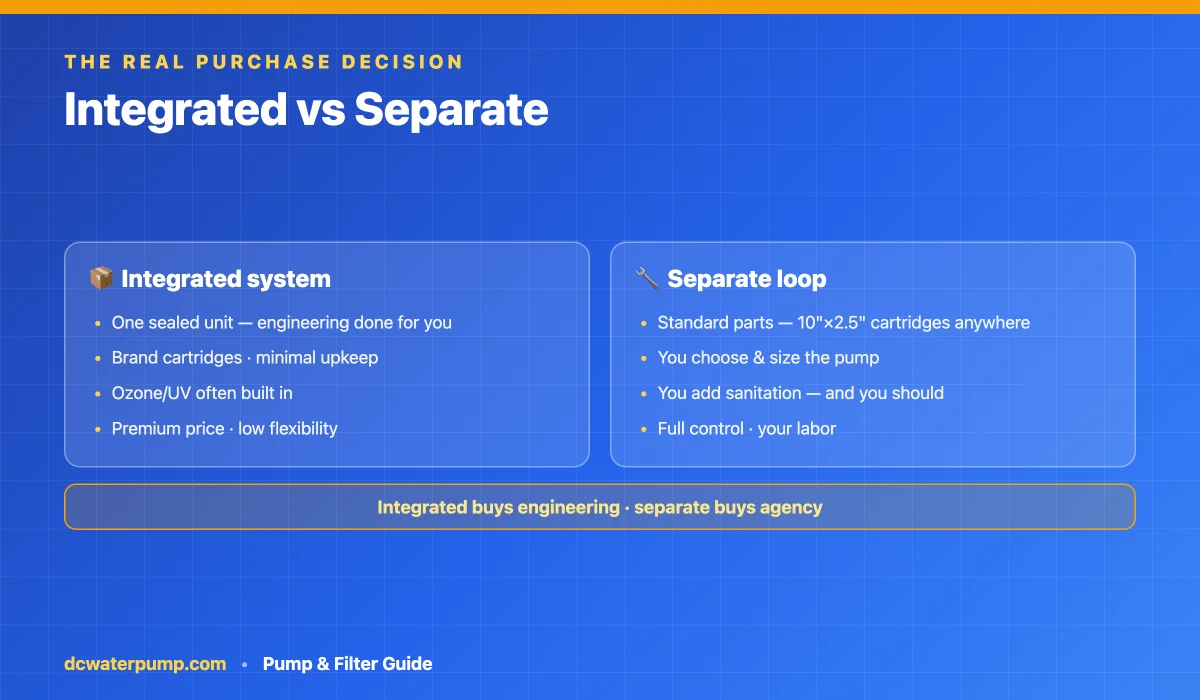
Die eigentliche Entscheidung: Integriertes System vs. separater Regelkreis
| Integriertes System | Getrennter Pumpen- und Filterkreislauf | |
|---|---|---|
| Was es ist | Ein geschlossenes Produkt: Behälter + Pumpe + Filter + Kühler (oft + Ozon/UV) | Ihre Badewanne, plus Standardteile: Pumpe, Filtergehäuse, Filterpatrone, Kühler |
| Ungefähre Kosten | Premium – üblicherweise mehrere tausend Dollar für das fertige Gerät | Ein Bruchteil davon in Einzelteilen, zuzüglich Ihrer Bauzeit |
| Pumpe | Eingebaute Umwälzpumpe, vom Hersteller dimensioniert | Sie wählen – und passen die Größe an die Schlaufe an. |
| Patrone | Oft markeneigen | Standardmäßig 10″×2,5″ plissiertes Polyester, beschafft von überall |
| Hygiene | Ozon oder UV-Licht sind häufig eingebaut | Du fügst es hinzu – und du solltest |
| Wartung | Minimal: Tauschen Sie die Kartusche planmäßig aus. | Alle Verbindungsstücke und O-Ringe gehören Ihnen. |
| Flexibilität | Niedrig – so wurde es ausgeliefert | Hochwertig – jede Komponente jederzeit aufrüsten |
| Richtig für | Problemloser Einsatz im privaten oder gewerblichen Bereich | Heimwerker, Studios, alle, die die Kontrolle behalten wollen |
Die ehrliche Zusammenfassung: Integration bedeutet für Sie Entwicklungskompetenz; Trennung bedeutet Agenturleistung. Beides ist nicht falsch. Falsch ist es jedoch, Komplettpreise zu zahlen und dann Eigenverantwortung zu fordern, oder separate Systeme zu bauen und die Planung – in der Regel die Sanitärinstallation und die Abstimmung von Pumpe und Filter – zu überspringen.
Die Wahl der richtigen Patrone: ein Standard, drei Entscheidungen
Das DIY-Ökosystem hat das Gehäuse- und Kartuschenformat effektiv standardisiert, wodurch die Auswahlmöglichkeiten begrenzt sind:
| Entscheidung | Optionen | Die stehende Wahl |
|---|---|---|
| Größe | 5″, 10″, 20″ × 2,5″ | 10″ × 2,5″ — der faktische DIY-Standard; passt in gängige Gehäuse |
| Material | Plissiertes Polyester, Carbon, Polypropylen, Spinnfasergarn | Plissiertes Polyester — Der Community-Standard für diesen Kreislauf (spülbar, gleichbleibend); Kohlenstoff erhöht den Durchfluss unnötig; gewickelte Kartuschen nur von seriösen Herstellern kaufen. |
| Mikron | 5 / 20 / 50 | 20 Mikron Für optimale Balance; 50 für längere Lebensdauer und gröberen Fang; 5 für feinsten Fang und schnellste Verstopfung. |
Die Mikron-Logik, wie sie Patronenhersteller wie … iGlu Therapy gibt an, dass esJe niedriger die Filterfeinheit, desto mehr Wasser fängt sich im Filter und desto schneller verstopft er. Als Faustregel für Badewannen im täglichen Gebrauch gelten folgende Werte: 50 Mikron ≈ 1–2 Wochen pro Filterkartusche, 20 Mikron ≈ 5–10 Tage, 5 Mikron ≈ 3–5 Tage. Diese Werte sind Richtwerte und keine exakten Laborergebnisse – die tatsächliche Nutzungsdauer hängt von der Anzahl der Badenden und davon ab, ob Sie die Kartuschen wöchentlich spülen. Ein eindeutiges Zeichen für einen Filterwechsel: Der Wasserdurchfluss nimmt sichtbar ab.
Die Pumpenseite: Was der Filter benötigt
Für den separaten Stromkreispfad ergibt sich die Pumpenspezifikation aus drei Anforderungen, die dieser Cluster bereits erfüllt hat:
- Fließen: 4–6 Umwälzungen pro Stunde in einem gekühlten Kreislauf, innerhalb des vom Kühler vorgegebenen Bereichs – das vollständige Verfahren ist das Fünfstufiger Größenratgeber.
- Kopf: Der Druckabfall des Filters (der laut Produktdaten mit zunehmender Belastung ansteigt) kommt zusätzlich zum Widerstand des Kühlers hinzu; lesen Sie die Pumpenkennlinie bei der Gesamtförderhöhe des Kreislaufs inklusive verschmutztem Filter ab.
- Pflicht: Dieser Kreislauf läuft kontinuierlich. Magnetantriebe – ohne Wellendichtung, die undicht werden oder verschleißen könnte – sind aus gutem Grund der Standard in der DIY-Szene, und es handelt sich um dieselbe Architektur. bürstenlose Gleichstrom-Umwälzpumpen Verwendung: gekapselter Magnetantrieb, keine Bürsten (Lager bleiben Verschleißteile), hochwertige Einheiten unter 35 dB mit ~30.000 Stunden Das Design funktioniert mit 12/24 V Gleichstrom und einstellbarer Drehzahl. (Wie man dB-Angaben liest und modellspezifisch überprüft, erfahren Sie in unserer Anleitung.) Anleitung für geräuschlose Pumpen.)
Diese letzte Funktion bedarf einer genauen Beschreibung, da sie leicht falsch bedient werden kann: Die Geschwindigkeitsanpassung ermöglicht Ihnen Die Differenz zwischen den Patronenservices ist kein Ersatz dafür.. In der Industrie ist die Filterpatronenreinigung und der Filterwechsel an Druckanstieg und Durchflussabfall – das Belastungssignal – gekoppelt. Das ständige Hochdrehen der Pumpe, um eine verschmutzte Filterpatrone zu kompensieren, verschleiert dieses Signal und erhöht gleichzeitig den Druckabfall. Der richtige Ansatz: Die Pumpe (mit Drehzahlreserve) auf die Förderhöhe bei verschmutzter Filterpatrone auslegen und das ständige Hochdrehen der Pumpe als Warnsignal für einen Filterpatronenwechsel und nicht als Lösung betrachten. Anlagenbauer, die diese Klasse spezifizieren, können mit folgendem beginnen: Kalttauchbereich der BLDC-Pumpe — Bürstenlose Gleichstrompumpen, hergestellt seit 2009, Standardmuster in 3–7 Werktagen.
Häufig gestellte Fragen
Benötige ich eine separate Pumpe zur Filtration, oder übernimmt die Pumpe des Kühlers beides?
Das hängt von der Architektur ab. Integrierte Systeme betreiben typischerweise eine eingebaute Pumpe, die Filter und Kühler in einem einzigen Kreislauf durchströmt. Auch bei getrennten Systemen ist üblicherweise eine Pumpe für den gesamten Kreislauf zuständig – eine entsprechend dimensionierte Pumpe, die Filter und Kühler durchströmt, ist die Standardkonfiguration; eine zweite Pumpe kommt nur bei ungewöhnlichen Split-Loop-Systemen zum Einsatz.
Welcher Mikronfilter eignet sich am besten für ein Kaltwasserbad?
20 Mikron plissiertes Polyester ist die optimale Standardeinstellung: Es bietet eine effektive Partikelrückhaltung und einen praktikablen 5- bis 10-Tage-Zyklus bei täglichem Gebrauch. Wählen Sie 50 Mikron für eine längere Filterpatronenlebensdauer und gröbere Filterung oder 5 Mikron für eine besonders feine Filterung, wenn Sie den Filter alle paar Tage wechseln möchten.
Wie oft sollte ich die Kartusche wechseln?
Als Faustregeln für den täglichen Gebrauch gilt: 50 Mikron alle 1–2 Wochen, 20 Mikron alle 5–10 Tage, 5 Mikron alle 3–5 Tage – bei sichtbarem Durchflussrückgang auch früher. Wöchentliches Spülen von Faltenfilterkartuschen verlängert deren Lebensdauer. Ihre individuelle Nutzung beeinflusst diese Werte; der Durchflussrückgang ist der aussagekräftigste Indikator.
Töten Kaltwasserfilter Bakterien ab?
Nein. Ein Partikelfilter entfernt Partikel oberhalb seiner Mikron-Bewertung; er desinfiziert nicht. Die Wasserreinigung ist ein eigenständiges Verfahren: Zunächst wird eine kontinuierliche Restwasseraufbereitung durchgeführt, die üblicherweise durch Ozon oder UV-Licht ergänzt wird. Laut den Richtlinien des öffentlichen Gesundheitswesens (z. B. dem Model Aquatic Health Code der CDC) handelt es sich dabei um sekundäre Systeme neben einem Restwasserdesinfektionsmittel, nicht um einen Ersatz dafür. Die Filtration unterstützt dieses Verfahren; sie ersetzt es niemals.
Kann ich einen Poolfilter für ein Kaltwasserbecken verwenden?
Hydraulisch gesehen ist ein überdimensionierter Patronenfilter nicht schädlich – eine größere Filterfläche bedeutet im Allgemeinen … weniger Der Druckabfall ist entscheidend. Die Probleme sind praktischer Natur: Gehäuse für Pools sind für das Volumen eines Tauchfilters zu sperrig und teuer, und Sandfilter benötigen speziell Rückspülströme, die weit über den Durchfluss eines Tauchkreislaufs hinausgehen. Die optimale Lösung ist ein 10″ × 2,5″ Inline-Filterkartuscheformat in Kombination mit einer passenden Umwälzpumpe.
Welche Durchflussrate benötigt ein Filterkreislauf?
Dasselbe gilt für den Kühlvorgang selbst: Üblicherweise 4–6 Wannenvolumina pro Stunde, gefördert bei der tatsächlichen Förderhöhe des Kühlkreislaufs und innerhalb des spezifizierten Durchflussbereichs des Kühlers. Der Filter ändert nicht das Ziel – er ändert die Förderhöhe, die die Pumpe überwinden muss, um dieses Ziel zu erreichen.
Verringert das Hinzufügen eines Filters den Förderstrom meiner Pumpe?
Ja – jeder Filter erhöht die Förderhöhe, und eine verstopfte Filterpatrone verstärkt diesen Effekt. Das ist zu erwarten; die Pumpe sollte daher von Anfang an auf die Förderhöhe eines verschmutzten Filters ausgelegt sein. Drehzahlverstellbare Pumpen schaffen eine nützliche Reserve zwischen den Wartungsintervallen – aber steigender Druck und sinkender Durchfluss signalisieren, dass die Filterpatrone verstopft ist. Die Lösung für eine verstopfte Filterpatrone ist eine neue Patrone, nicht eine schnellere Pumpe.
Wohin als Nächstes?
Starten Sie die Pumpenhälfte der Entscheidung bei Was eine Kaltwasserpumpe bewirkt, Passen Sie es an die Größe an. Fünf-Schritte-Anleitung, und überprüfen Sie den gesamten Build gegen die Fehlerleitfaden bevor Sie Geld ausgeben.